
Construction is one of Aotearoa New Zealand’s most important industries. It gives shape to our homes, schools, hospitals, civic spaces, infrastructure, and the everyday environments that support community life. Yet behind the visible progress of new developments sits a less visible challenge: construction and demolition waste.
The scale is significant. The Ministry for the Environment’s 2025 New Zealand Construction and Demolition Waste Baseline and Tracking Methodology Report(Figure 1) found that construction and demolition activities are responsible for an estimated 40 to 50 percent of all material going to landfill. This matters not only because waste takes up landfill space, but because every discarded component represents embedded energy, labour, transport, extraction, processing, money, and wider environmental damage.
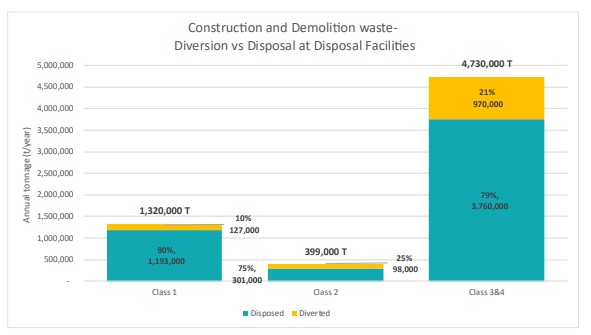
Figure 1: Breakdown of diversion percentages of construction waste disposal facilities. (Source: New Zealand Construction and Demolition Waste Baseline & Tracking Methodology Report by BECA)
Construction waste is also connected to climate impacts, but not simply because buildings use energy once occupied. The waste issue is largely about embodied value. When usable timber, plasterboard, concrete, metals, fixtures, or fittings are discarded, the resources and emissions already invested in extracting, manufacturing, transporting, and installing those materials are lost (Figure 2). Replacement materials then need to be produced and delivered again. In this way, waste reduction, reuse, and recovery are practical ways to protect both material value and embodied carbon.
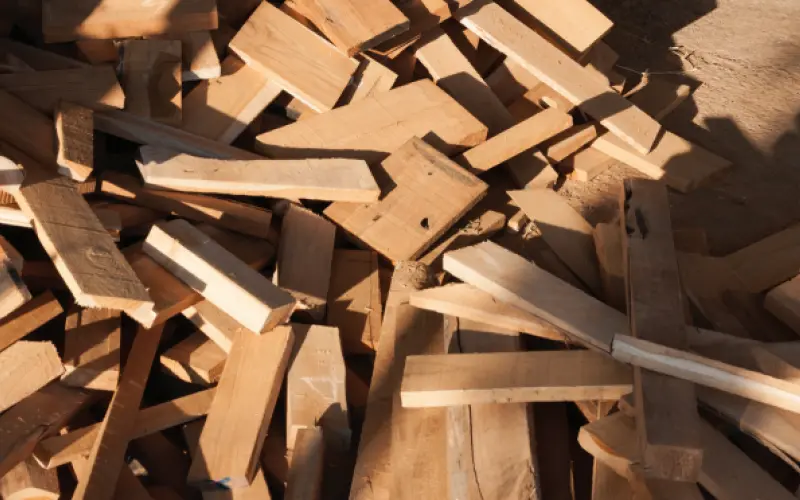
Figure 2: What can be done with excess timber? (Source: BRANZ’s ‘Waste wood woes’ article)
Construction and demolition waste is often discussed as though it is an unavoidable by-product of building. In reality, much of it is the result of how the construction system is currently structured. Materials are ordered with contingencies, design changes occur late, specifications are altered, trades work under tight timeframes, and waste disposal is often cheaper and easier than separation, storage, reuse, or recovery.
The good news is that waste can be reduced at different stages of a project. BRANZ’s REBRI research project notes that opportunities to reduce building material waste exist across all stages of construction and demolition, from design and procurement through to site management, deconstruction, reuse, recycling, and recovery. This is an important point: waste is not only created when something is thrown into a skip. It is often created much earlier, through decisions made in the briefing, design, costing, ordering, programming, and contracting phases.
At the front end of a project, teams can design to standard material sizes, reduce unnecessary complexity, coordinate services early to avoid clashes, and specify materials that have reuse or recycling pathways. Procurement can also make a difference by requiring waste management plans, supporting accurate ordering, encouraging supplier take-back schemes, and giving contractors the time and space to separate or salvage materials. These upstream decisions are often less visible than on-site waste sorting, but they are essential because they prevent waste before it appears.
Why construction waste is difficult to solve?
Construction waste is complex because construction itself is complex. A building site is not a factory with a single controlled material flow. It is a fast-moving, multi-party environment involving clients, designers, engineers, contractors, subcontractors, suppliers, waste companies, councils, regulators, and future users. Each party influences material decisions, but no single party controls the whole system.
Several recurring barriers make waste reduction difficult in practice.
First, there is the issue of space. Many urban sites have limited room for separate bins, storage of reusable materials, or careful sorting. When a project is constrained by access, staging, weather, neighbours, traffic management, and programme pressures, the skip often becomes the easiest solution.
Second, there is the issue of time. Separation, salvage, and reuse require planning. Deconstruction takes longer than demolition. Materials need to be assessed, handled carefully, stored safely, and matched with a future use. In a sector where delays are costly, waste minimisation needs to be built into the programme from the outset rather than added as a good intention once construction has begun.
Third, there is the issue of market access. Reuse depends on a functioning ecosystem of demand, logistics, storage, quality assurance, and confidence. A contractor may have surplus timber, insulation, bricks, doors, tiles, fixtures, or joinery, but unless there is a practical pathway to move those materials to someone who can use them, disposal remains the default. Regional variation also matters, as not every community has easy access to the same recovery facilities, storage spaces, or reuse networks.
How to shift this?
Waste is often hidden behind site hoardings and landfill gates. Making waste visible, measurable, and discussable can help shift behaviour. “Waste management” suggests that waste is inevitable and simply needs to be handled responsibly at the end. “Resource stewardship” asks a deeper question: how do we care for materials across their whole life?
This shift aligns strongly with sustainability practice in Aotearoa New Zealand. It recognises that materials come from landscapes, ecosystems, labour, energy systems, and communities. It asks us to value what has already been made. It challenges the assumption that new is always better. It encourages the sector to design, build, maintain, adapt, and dismantle with greater care.
A circular approach to construction does not mean that every material can be reused in every situation. It means asking better questions earlier: Can this material be avoided? Can it be ordered more accurately? Can the design be simplified? Can components be removed intact? Can surplus materials be shared with another project? Can the demolition sequence become a deconstruction plan? Can councils, suppliers, and contractors work together to create local recovery pathways?
Construction will always involve material transformation. There will always be offcuts, changes, breakages, and end-of-life decisions. The current scale of construction and demolition waste is not inevitable. It is the result of systems we have designed, and therefore systems we can redesign.
About The Author: Sarah Skillen
More posts by Sarah Skillen