
Aotearoa is a country with plentiful and accessible renewable energy sources. Our geography gives us unique hydro and geothermal opportunities to source sustainable energy and fuel national growth; however, natural gas and coal are still a significant portion of our total supply. Steady progress has been made over the last decade towards our 2030 national goal of 100% renewables, with 2025 likely to match last year’s 85.5% renewable share of generated electricity (Figure 1). The drive to close the gap towards 100% continues to be ever prevalent but mountingly difficult.
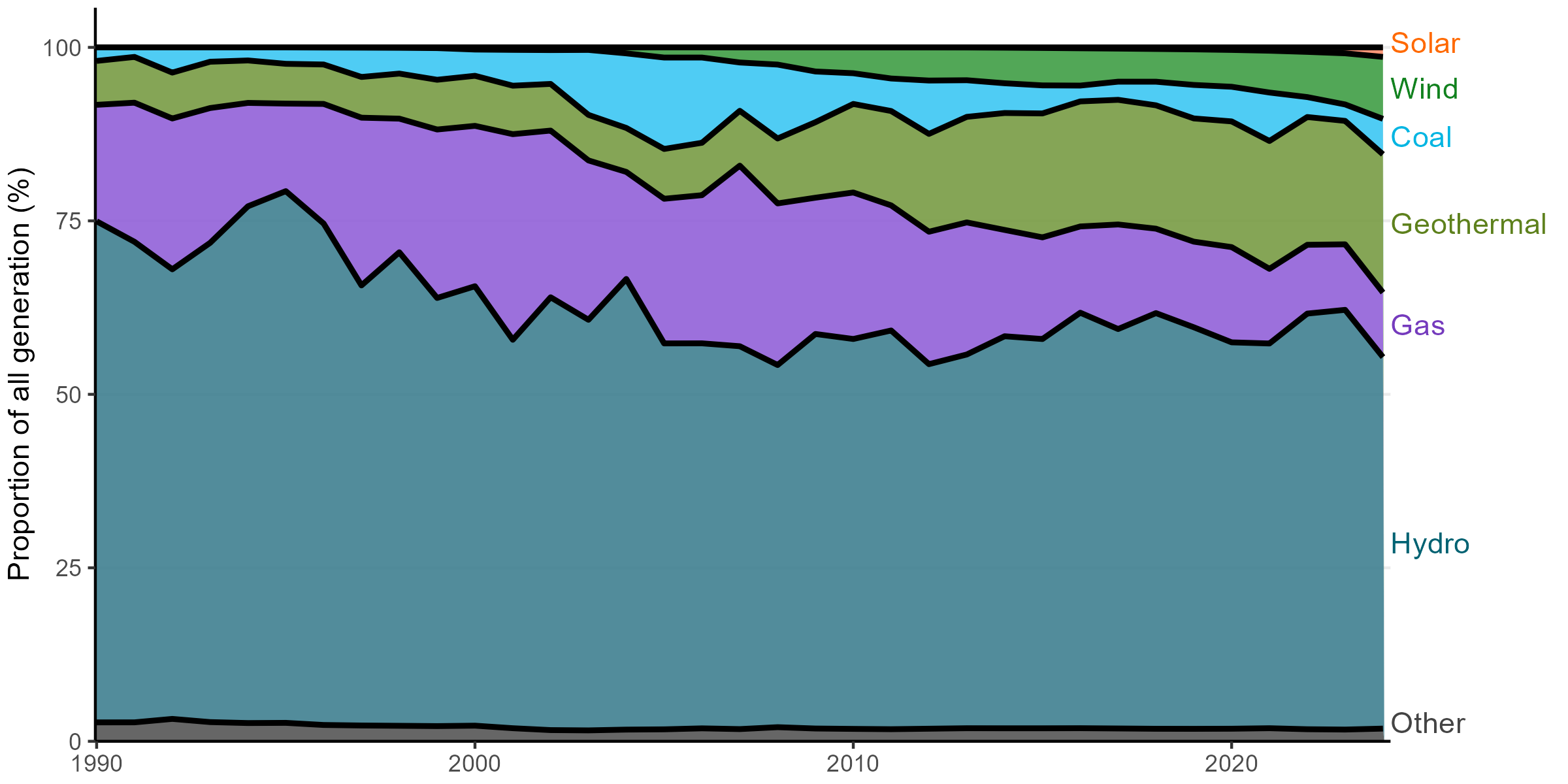
Figure 1: The annual total electricity generation from different sources. Source: https://www.mbie.govt.nz/building-and-energy/energy-and-natural-resources/energy-statistics-and-modelling/energy-publications-and-technical-papers/energy-in-new-zealand/energy-in-new-zealand-2025/electricity
Geothermal
100% renewable power is feasible- for example, Iceland, a smaller country with total renewable generation. This is managed through strong investment in geothermal generation, leveraging their position on a plate boundary. Geothermal capacity allows for a stronger baseload, compensating for the continual wind and solar growth, as well as improving grid security during dry years.
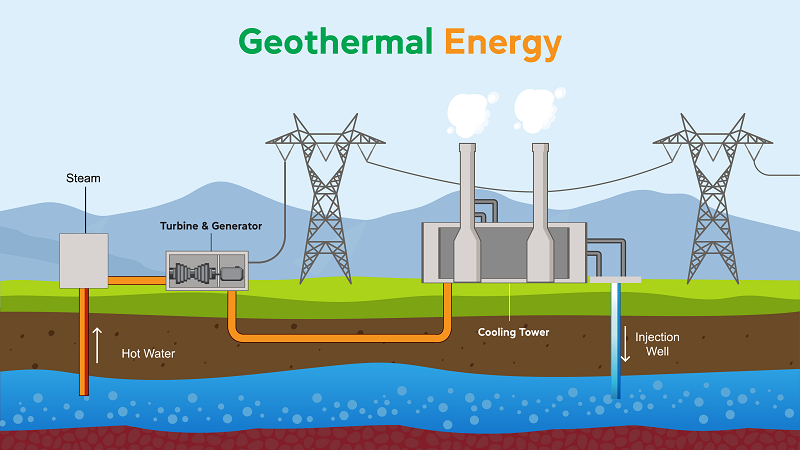
Figure 2: Geothermal energy is harnessed from the Earth’s thermal reservoirs via wells and heat exchange systems. Source: https://engineersguidebook.com/what-is-geothermal-energy/
Geothermal (Figure 2) constitutes 20% of New Zealand’s total generation using sources in the North Island volcanic regions. These areas are well positioned to grow over the next decade under the cooperation agreement signed last year for continued shared knowledge between Iceland.
Pumped-Hydro
Pumped-hydro schemes offer an innovative way to provide power during peak periods. Pumping water upstream during solar and wind peak periods allows lake water to store gravitational potential energy ready to run back down like a battery. This also has the benefit of security during dry years and grid improvement with the large investments into wind and solar, which are uncontrolled sources.
National scrapped investigations into a Lake Onslow pumped-hydro proposal to reign in government spending at the end of 2023. This 16 billion dollar project would double our national hydro storage. Despite the government’s hesitation, a private consortium applied to revive the project using the fast-track bill introduced in 2024.
Though Lake Onslow proposes a way to maintain and grow our renewables share, the importance of fully considering social and environmental impacts remains imperative. The fast-track bill neglects proper environmental considerations, including pollution and ecosystem disruption. Australia’s recent Snowy 2.0 pumped-hydro scheme(Figure 3) shows exactly how easy these schemes are to get wrong—blown-out budgets, time, and unacceptable biodiversity damage.
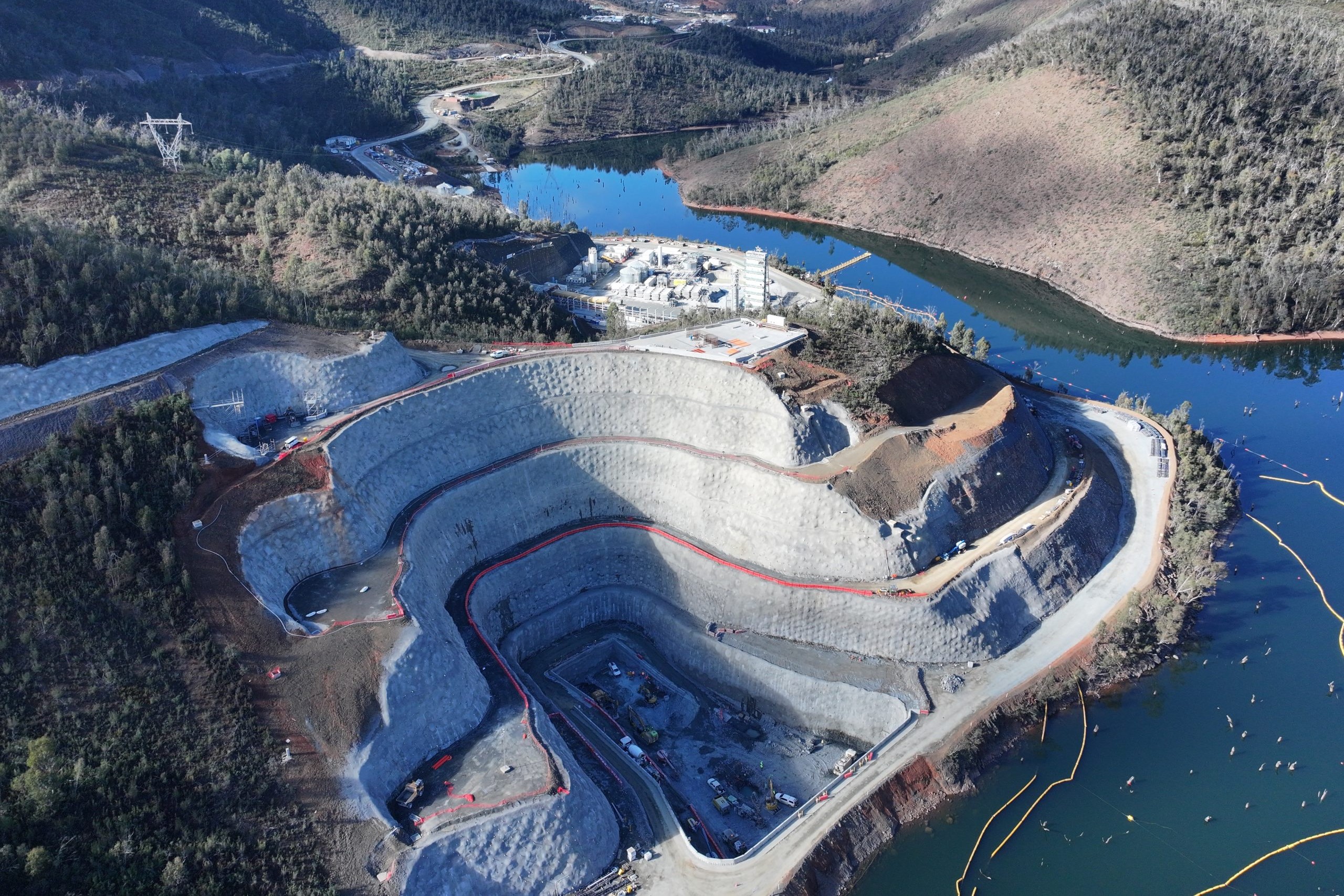
Figure 3: The water draw for the Snowy 2.0 project sourced from the reservoir. Source: https://www.afr.com/companies/energy/snowy-hydro-adds-fourth-tunnel-borer-in-bid-to-keep-project-on-track-20240822-p5k4fp
I believe a more well-rounded approach to our national climate strategy is needed. The drive to close the gap to total renewable energy is important, but focusing too narrowly on headline targets risks overlooking subtler and less quantifiable ecological and cultural impacts. A more well-rounded approach that values ecosystem integrity, community and Te Ao Māori partnerships, and long-term planning will ensure the transition is sustainable at every level.
The balance of ambitious action and broad consideration remains a complex and difficult problem needing all hands on deck.
About The Author: Trent Kamper
More posts by Trent Kamper